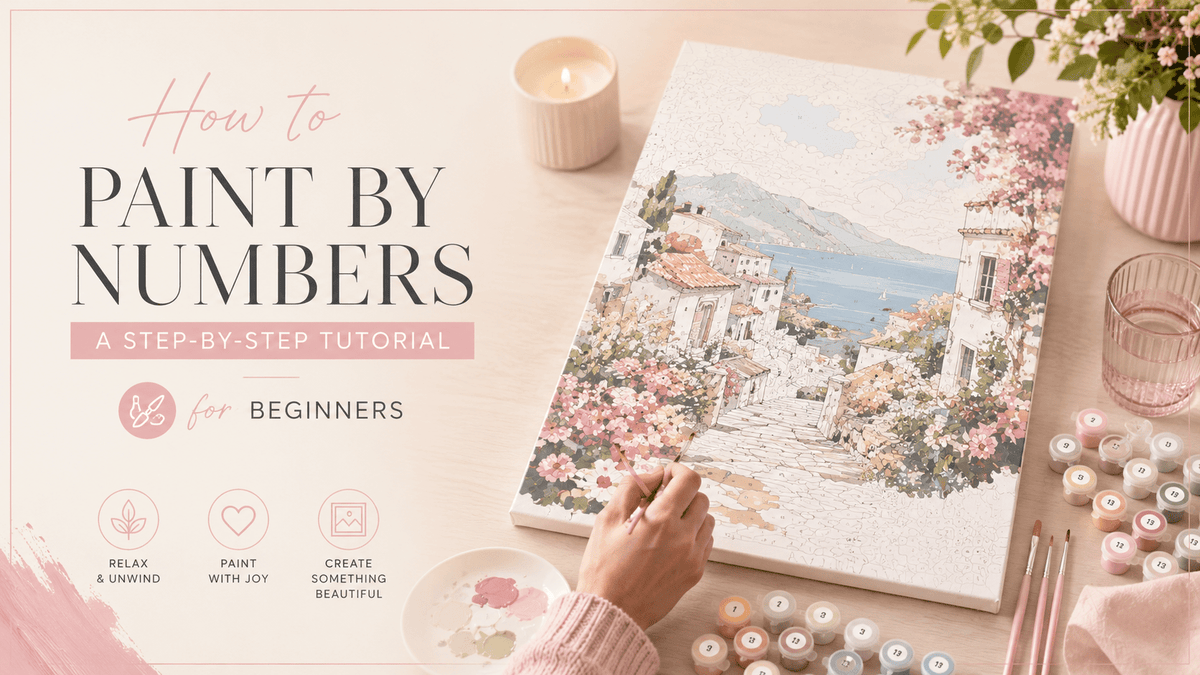
Article: Paint by Numbers: The Complete Guide for Adults (2026)
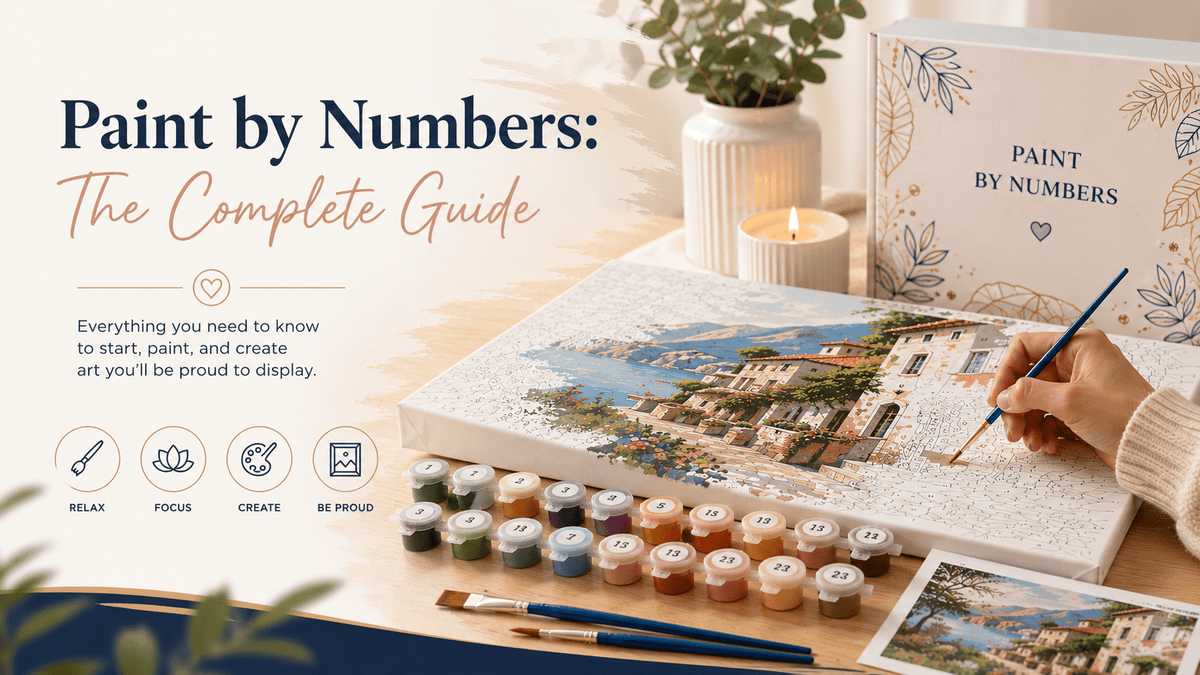
Paint by Numbers: The Complete Guide for Adults (2026)
1. What is paint by numbers?
Paint by numbers is a guided painting method where a canvas is divided into small numbered sections. Each number matches a specific paint color. You fill the areas one by one, and the image slowly appears as the colors build across the canvas.
The beauty of the method is that it removes the pressure of a blank page. You do not have to sketch, mix a full palette, or decide where every shadow should go. The structure is already there, so your focus can shift to something calmer: loading the brush, filling a shape, rinsing, repeating, and watching progress happen.
| Part of the process | What it means for you |
|---|---|
| Numbered canvas | You know exactly where each color goes. |
| Matching paint pots | No color mixing is required in most kits. |
| Small brush sections | You build detail gradually instead of all at once. |
| Finished image | You create a real piece you can frame or gift. |
For a step-by-step beginner tutorial, our guide on how to paint by numbers goes deeper into first-session setup, brush care, and finishing details.
2. A brief history of paint by numbers
The modern hobby has roots in mid-century America. The Smithsonian’s National Museum of American History archives identify the concept as being conceived in 1949 by Max Klein, owner of the Palmer Paint Sales Company, and commercial artist John Daniel “Dan” Robbins. Under the Craft Master name, their team created kits that made painting feel accessible to everyday households.
Those early kits were already surprisingly close to what you see today. Smithsonian collection notes describe boxed sets with a canvas, and later board, printed with a blue line drawing. The numbered sections matched specific paint colors, and the kits included paints, brushes, and instructions.
What changed over time was the audience. In the 1950s, the hobby was often tied to home décor, leisure, and the joy of making something yourself. In 2026, adult painters still love that same feeling, but the designs are broader: pet portraits, landscapes, florals, modern abstracts, travel scenes, and custom photo kits. The appeal remains simple: you get creative structure without needing formal art training.
3. How paint by numbers works in 5 steps
A good kit is simple to start, but a little preparation makes the experience much smoother. Here is the basic process our team recommends for first-time adult painters.
- Unpack and flatten your canvas. Lay everything out before opening paint pots. If the canvas was rolled, place it under clean books for a day or tape the corners to your work surface.
- Match each paint pot to the canvas numbers. Check that the labels are readable, then keep the pots in numerical order so you do not lose time searching.
- Start with either large areas or light colors. Large areas help you build confidence. Light colors first can help keep your brushwork clean, especially around pale backgrounds.
- Paint in short, comfortable sessions. Many adults enjoy 30 to 60 minutes at a time. That is enough to see progress without rushing.
- Let it dry, touch up, then display. Once the canvas is fully dry, add any second coats, clean edges, and decide whether to seal or frame it.
From our customers’ feedback, we have learned that people who treat their kit like a relaxing routine usually enjoy the result more than those trying to finish in one weekend.
4. What's inside a paint by numbers kit?
A quality paint by numbers kit should arrive with the core materials you need to begin. Standard product listings from Paint by Numbers Adults include a numbered canvas, high-quality pre-mixed acrylic paints, three fine-detail brushes in different sizes, a reference sheet, an easy-to-follow guide, and an optional pre-assembled wooden frame when selected.
The canvas is the foundation. Look for clear printing, readable numbers, and enough detail to make the final image feel rich without turning every inch into a puzzle. The paints should be creamy, opaque enough to cover the numbers, and pre-mixed so you can simply open a pot and paint.
The brush set matters more than beginners expect. A small detail brush helps with tiny spaces, a medium brush handles everyday sections, and a slightly larger brush makes backgrounds and broad color blocks more comfortable. You can absolutely finish a kit with the included brushes, but many painters later add accessories such as extra fine brushes, a canvas frame, clips, or a small desk easel for comfort.

5. Paint by numbers for adults vs. for kids
Adult kits and children’s kits follow the same core idea, but they are designed for very different attention spans, motor skills, and final results. Adult designs usually include more colors, smaller shapes, subtler shading, and more realistic subjects. The finished piece is often meant for a living room, bedroom, office, or meaningful gift.
Children’s kits are usually simpler. The shapes are larger, the images are more playful, and the goal is often confidence, coordination, and creative fun rather than a detailed finished artwork. If you are shopping for a younger painter, it is better to choose a dedicated paint by numbers for kids design instead of handing them a complex adult canvas.
For adults, the best choice depends on your patience and the type of image that motivates you. If you want relaxing evenings and a finished piece you are proud to hang, start with paint by numbers for adults that match your style, not just your skill level. A design you love will carry you through the tiny details.
6. Difficulty levels: easy, intermediate, advanced
Difficulty is not only about artistic skill. It is mostly about section size, color count, contrast, and the amount of detail in the image.
Easy kits usually have larger spaces, clearer outlines, and fewer tiny transitions. They are ideal if this is your first canvas, if you want a low-pressure weekend project, or if your eyesight or hand steadiness makes tiny areas tiring. Landscapes with big skies, simple florals, and bold graphic designs can be great starting points.
Intermediate kits are the sweet spot for many adults. They include enough detail to feel satisfying, but not so much that the project becomes overwhelming. Pet portraits, cozy cafés, beach scenes, and botanical art often fall here, depending on the image.
Advanced kits require patience. They may have detailed fur, reflections, faces, architecture, or many small areas close together. These are not “better” than beginner kits; they are simply more time-intensive. Choose advanced only if you enjoy detail work and do not mind spending several weeks on one canvas. The right level should feel absorbing, not punishing.
7. Sizes and formats explained
Size affects both the painting experience and the final look on your wall. A small format is quicker and easier to store, while a larger canvas gives more room for detail and smoother transitions. Many adult kits use a display-friendly format such as 16 x 20 inches; current Paint by Numbers Adults product pages list that size for several designs.
A larger canvas is usually better for portraits, pets, city scenes, and anything with facial features or fine texture. If the canvas is too small, important details can turn into tight clusters that are harder to paint cleanly. For custom photo kits, bigger is often safer when the image includes more than one person or pet.
Smaller formats still have a place. They are easier to complete, less intimidating, and wonderful for creative breaks. A set of mini paint by numbers designs can work well for gifts, small apartments, gallery walls, or anyone who wants the satisfaction of finishing several pieces instead of one large project.
8. Framed, stretched, or rolled canvas?
The canvas format changes how your kit feels from the first day. A framed or pre-stretched canvas is already mounted on a wooden frame. That means it stays taut while you paint and can be hung more easily once finished. Paint by Numbers Adults product pages describe framed options as already stretched on a wooden frame, while unframed options are classic rolled canvases that cannot be hung directly until stretched or framed.
A rolled canvas is usually more affordable and easier to ship. It is a good choice if you already have your own frame, plan to use a standard picture frame, or enjoy choosing custom framing after the artwork is complete. The trade-off is that you need to flatten or secure it before painting.
A stretched canvas is the easiest experience for many adults, especially beginners. The surface has light tension, the corners stay in place, and the finished piece already feels like wall art. If the design is a gift or something you plan to display, framed is often worth the upgrade.
9. Custom paint by numbers from your own photo
A custom kit turns your personal photo into a numbered canvas. Instead of choosing a pre-made design, you upload a meaningful image and receive a template created from that picture. Paint by Numbers Adults describes its custom option as a complete set that can include three nylon brushes, pre-mixed acrylic paints matched to your photo, a numbered canvas, and an optional framed canvas.
The best custom photos are clear, bright, and focused on one strong subject. Pet portraits, wedding moments, family photos, vacation memories, and house portraits all work well when the image has good lighting and enough contrast. Very dark, blurry, or crowded photos can still be meaningful, but they may not translate into clean numbered sections.
Our practical advice: choose emotion first, then check quality. A photo of your dog looking directly at the camera will usually paint better than a distant shot with lots of background clutter. For more detail, see our guide to ordering custom from your photo. A personal canvas takes more care, but it often becomes the piece people are most proud to finish.
10. Most common mistakes (and how to avoid them)
The most common mistake is rushing. Acrylic paint dries quickly, but your eyes and hands still need breaks. If you push through fatigue, tiny sections become messy and the process stops feeling enjoyable. Work in short sessions and stop while you still feel steady.
Another mistake is using too much water. A slightly damp brush is helpful, but a wet brush can make acrylic paint streaky and thin. Rinse your brush, blot it on a paper towel, then reload with paint. You want smooth coverage, not watery color.
Many beginners also forget to close paint pots. Acrylic can dry out when left open, especially in warm rooms. Open one or two colors at a time, then close each lid firmly before moving on.
Finally, do not panic over small errors. If you paint outside a line, let the area dry completely. Then cover it with the correct color using a small brush. Most mistakes disappear with a second coat, and many are invisible once the full image is complete.

11. How long does a paint by numbers kit take?
Completion time depends on size, detail, and your painting rhythm. From our customer feedback, a standard adult canvas often takes about 18 to 35 hours of hands-on painting. A simple design may take less, while detailed portraits, fur, architecture, or complex backgrounds can take longer.
The better question is how you want the project to fit your week. If you paint for 45 minutes three evenings a week, a 24-hour project becomes a calm month-long ritual. If you paint for three hours on Saturdays, it may become a few weekends of focused creative time. Both approaches are valid.
Your speed will also change as you go. The first session is slower because you are learning the canvas, organizing colors, and finding your grip. By the second or third session, most people move more confidently. Do not measure success by speed. A finished piece is satisfying, but the quiet progress along the way is the part many adults come back for.
12. How to seal, frame, and display your finished piece
Once your painting is completely dry, look at it in natural light. This helps you spot thin areas, visible numbers, or edges that need a small touch-up. Add second coats where needed, especially over pale colors or dark printed numbers.
Sealing is optional, but it can give the surface a more finished look and help protect the paint from dust. Use a clear acrylic varnish in matte, satin, or gloss. Matte keeps the look soft, satin adds a gentle finish, and gloss makes colors appear richer. Apply a thin, even coat only after the painting is fully dry.
For framing, you have several choices. A stretched canvas can be hung as-is or placed inside a floating frame. A rolled canvas can be stretched, mounted, or framed behind glass like a print. Choose a frame that supports the artwork rather than competing with it. A simple black, white, natural wood, or gold frame usually works well.
Display it somewhere you will actually see it: above a reading chair, in a hallway, near your desk, or as part of a small gallery wall.
13. Where to buy a quality paint by numbers kit
A quality kit should make the process easier, not leave you troubleshooting from the first brushstroke. Look for clear product photos, readable canvas details, pre-mixed acrylic paints, multiple brush sizes, and a support team that can answer questions before and after your order.
Price is one useful signal, but it is not the only one. Very cheap kits may have thin paints, unclear numbers, rough canvases, or limited customer support. At the time of writing, current Paint by Numbers Adults examples show standard 16 x 20 inch designs listed from $29.90 unframed and $44.90 framed, while a mini set example is listed from $44.90 unframed and $54.90 framed.
Also consider the shopping experience. Does the store explain what is included? Are the frame options clear? Are custom photo requirements easy to understand? Our team believes the right purchase should feel calm before the kit even arrives. You should know what you are getting, how to use it, and what to expect from the finished piece.

14. Is paint by numbers worth it? The honest answer
Yes, it is worth it for many adults, especially if you want a creative hobby that is structured, affordable, and easy to start at home. You get the satisfaction of making something with your hands without needing to buy a full art setup or learn drawing from scratch.
It is not the right fit for everyone. If you dislike detail work, want instant wall décor, or get frustrated by slow progress, you may prefer prints, puzzles, or a looser painting class. A kit asks for patience.
But if you enjoy quiet focus, visible progress, and the feeling of turning small steps into something beautiful, this hobby gives back more than the finished canvas. Many customers tell us they start one kit for relaxation and order the next because they miss the routine. That says a lot. It is not just about the art on the wall; it is about the time you spent making it.
FAQ: Paint by Numbers for Adults
1. Is paint by numbers really for adults?
Yes, paint by numbers is absolutely for adults.
Adult kits are designed with richer artwork, more detailed sections, and finished pieces you can frame or gift. Many adults use them as a relaxing evening hobby, a creative reset after work, or a gentle way to return to making art without pressure.
2. How long does it take to finish a kit?
Most adult kits take about 18 to 35 hours of painting time.
Simple designs may be quicker, while detailed portraits, pets, or architecture can take longer. Many painters finish over several weeks by working in 30- to 60-minute sessions instead of trying to complete everything at once.
3. Which paint by numbers kit is best for beginners?
The best beginner kit has larger sections, clear contrast, and a subject you genuinely like.
Choose florals, landscapes, bold abstracts, or simple animals before trying detailed faces or pet fur. A design you love matters because it keeps you motivated when the middle stage looks unfinished.
4. What is the average cost of a quality kit?
A quality adult kit usually costs around $30 to $60, depending on size and framing.
Current Paint by Numbers Adults examples include standard 16 x 20 inch kits from $29.90 unframed and $44.90 framed, with prices varying by format and product type.
5. Can I use my own photo?
Yes, you can order a custom kit from your own photo.
The best photos are sharp, well-lit, and focused on a clear subject such as a pet, couple, family member, home, or favorite travel memory. A good custom kit converts that image into a numbered canvas with matching paints.
6. How do I seal my finished painting?
Seal it with a clear acrylic varnish after the paint is fully dry.
Choose matte for a soft finish, satin for a gentle sheen, or gloss for richer color. Apply a thin, even coat in a dust-free area, and let it cure before framing or hanging.
7. What kind of paint comes in the kit?
Most quality kits include pre-mixed acrylic paint.
Acrylic is popular because it dries quickly, is easy to work with, and cleans from brushes with water while wet. Pre-mixed pots mean you do not need to blend colors yourself before matching them to the canvas numbers.
8. Can I fix mistakes?
Yes, most mistakes can be fixed once the paint dries.
Let the area dry completely, then cover the mistake with the correct color using a small brush. If the wrong color is dark, you may need two thin coats. Tiny imperfections often disappear when the whole painting is finished.
Ready to choose your first canvas? Explore our best-selling paint by numbers for adults and pick a design you would genuinely love to see on your wall. Start with the image that makes you want to sit down, open the paints, and enjoy the next brushstroke.